Magazine
Dentsu loses double digits in Germany – 500 AI projects are meant to strengthen the agency business
Dentsu reports a more than ten percent organic decline in Germany in the third quarter. At the same time, its AI transformation projects have grown to around 500, but the annual forecast is being lowered.
Contents · 4 sections
Dentsu presented weak quarterly figures on 16 November 2026 – and Germany, of all markets, is among its biggest problem cases. In the third quarter, the agency network's organic net revenue in Germany fell by more than ten percent. At the same time, the Japanese advertising group reports around 500 AI transformation projects with clients and about 50 companies already using its AI software. This makes a central question for the agency industry tangible: how quickly does AI expertise actually turn into new business?
Germany falls far more sharply than the group
Worldwide, Dentsu's organic net revenue declined by 3,7 percent between July and September. In the Europe, Middle East and Africa (EMEA) region, the decline was 7,1 percent, in the Americas 6,5 percent. Japan shrank by 2,4 percent, while the rest of the Asia-Pacific region grew by 10,3 percent. The group's operating margin fell from 15,0 to 10,5 percent in the quarter.
The country overview in Dentsu's investor presentation from 16 November is particularly revealing: Germany, together with the UK, Italy, Switzerland, Singapore and Thailand, falls into the group with more than ten percent organic decline. Spain, Poland, the Netherlands and India, by contrast, each grew by at least five percent. The decline is therefore by no means equally pronounced in all markets.
For the full year, Dentsu now expects roughly one percent organic decline, instead of the previously targeted flat to slightly growing revenue. The official quarterly overview documents the decline; the adjusted annual forecast is in the results presentation.
500 AI projects: Dentsu builds out a second business model
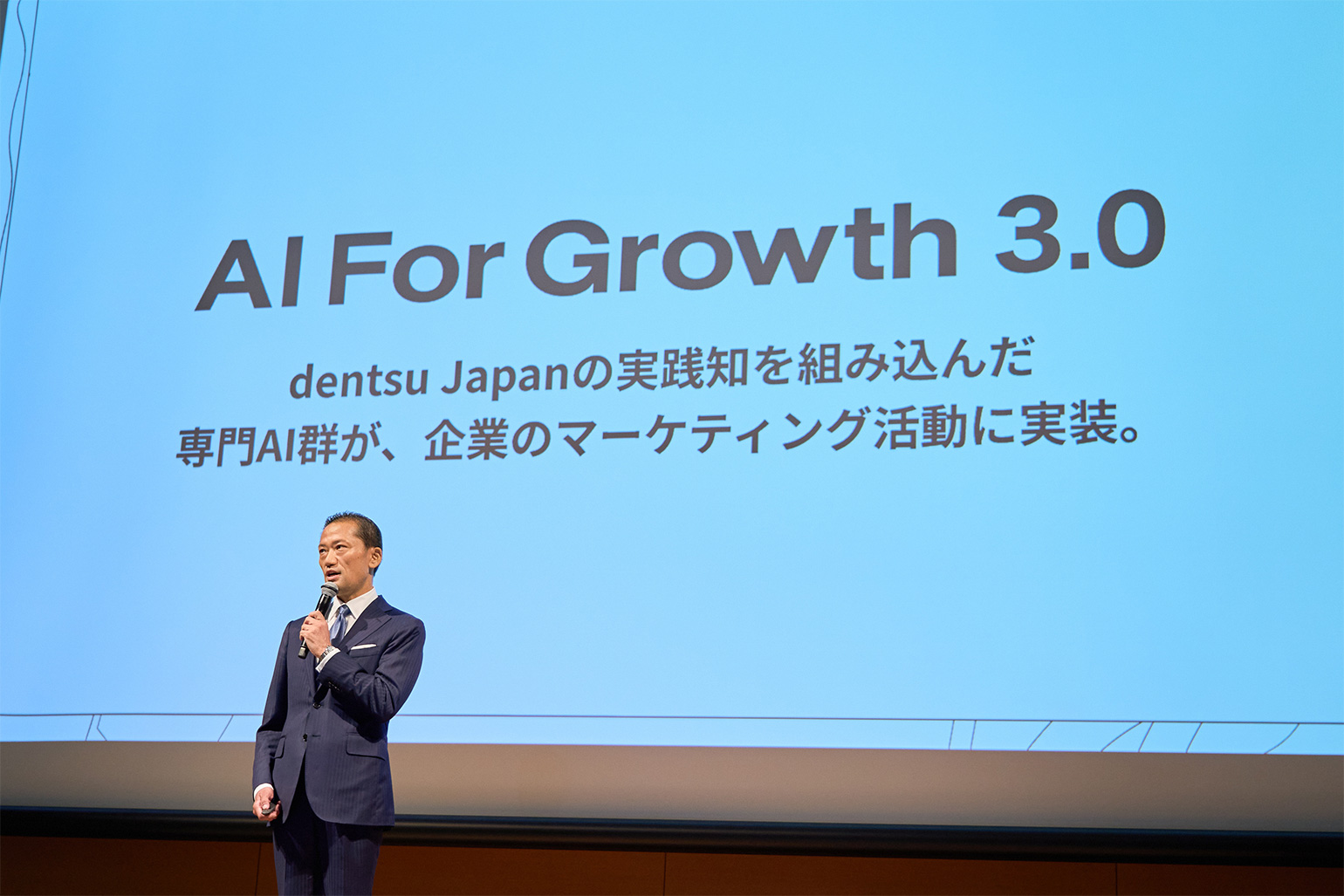
The group wants to define itself less solely through media planning and campaign production, and instead appear more strongly as a technology and transformation partner to its clients. In Japan, Dentsu now counts around 500 AI transformation projects as well as about 50 customers of its AI SaaS products. When it presented "AI For Growth 3.0" in May, the company still spoke of more than 200 AI projects under its care.
There is more behind these numbers than a text generator. The AI For Growth Suite, officially presented in May, combines virtual audience research, strategy development, creative ideas and media planning with specialised AI agents. A proprietary "People Model" is meant to model consumer reactions; the "Creative Thinking Model" supports idea development. Via APIs, customers can also integrate the specialised agents into their own workflows.
This is interesting for advertisers because the agency service is shifting from individual campaigns to ongoing data, software and consulting services. Our report on Deloitte's Converge and the orchestration of marketing agents describes similar platform approaches.
Job cuts completed, investments reduced
In parallel, Dentsu reached its planned reduction of around 3.400 positions in the international business ahead of schedule. The restructuring is expected to save about 42 billion yen in costs annually; for measures 2026, the group calculates with roughly 26 billion yen in expenses.
The second budget decision is noteworthy: Dentsu cut its internal investments planned for 2026 from about 14 to 11 billion yen. According to the company, around seven billion yen already flowed in the first nine months, mainly into media, AI, data and technology. The group is thus investing in new capabilities, but overall it is tightening spending.
In the US business, the Customer Experience Management (CXM) segment delivers at least a positive signal with 0,8 percent organic growth. Dentsu points there to marketing and AI transformation, better customer retention and additional projects. For Europe, the group announces, among other things, the expansion of solutions designed to make brands more visible in AI search and AI agents; such a solution is already offered in France.
What German marketing teams can take from this
At the next agency tender, a blanket promise like "We use AI" will hardly be enough. Anyone buying media, social content and customer experience together should ask for concrete workflows, data access, pricing model and measurable results: Which tasks will be automated? Which customer data does the agency need? What does the additional technology cost, and how does it change project billing?
The current figures also explain why such questions are gaining importance. Dentsu has to absorb falling traditional revenue in the same year, shrink its organisation and sell new AI services. Our comparison of large media agencies based on the Forrester criteria shows how data strategy and execution now feed into selection processes. Already the Dentsu CMO study 2026 had shown: faster marketing through AI does not automatically reach companies' budgets as lower effort.
The next test is therefore not the number of AI projects, but their economic impact. In Germany, the double-digit revenue decline is pushing especially hard to turn new tools into lasting client business.
Sources: Dentsu Q3 FY2026 earnings call, 16.11.2026, Dentsu quarterly figures, Dentsu "AI For Growth 3.0" of 25.05.2026, Adweek report. Cover image: Dentsu, AI For Growth press event May 2026.
Source