Magazine
Lyft tests an ad takeover before ride booking: why mobility apps are becoming media channels
Lyft is testing a large-format homepage ad placement with Pluto TV and Google Cloud. The alpha test shows how mobility apps monetize their user data and booking moments.
Contents · 4 sections
Lyft is testing a new ad format directly on the homepage of its ride app. The "Home Masthead" is meant to give selected brands the most prominent moment: the screen riders see before they book a ride. The first test partners include Pluto TV and Google Cloud. Adweek reported on the alpha test on 13 November 2026.
For advertisers, this is an interesting shift: the focus is not the social feed or product search, but a concrete everyday action. Lyft is selling visibility at the moment people decide where to go.
The new placement comes before the ride – and before the actual booking
Lyft already sells banners, video ads and branded elements on its interactive map. With Map Splash, brands can, for example, place a short animated overlay across the map; Sponsored Map Vehicles replace vehicle icons with brand artwork. According to Adweek, the new masthead goes further and is meant to occupy the start screen very prominently for a single advertising partner.
Important context: the masthead is still in alpha testing. Neither a general booking launch nor prices or binding performance figures for this specific format have been made public. Lyft describes its existing map formats on its advertising page.
Pluto TV brings a streaming campaign into the mobility app
The first especially vivid use comes from a streaming service. Pluto TV is promoting its "Escape to Pluto TV" campaign with the new placement. It accompanies the service's overhaul announced in September: a new interface, more ways to discover content and a larger on-demand library. This is shown in the official Paramount announcement of 23 September.
The thinking behind the placement is easy to follow: the ride to work, to the airport or home creates contact points outside the classic entertainment environment. A streaming service is not advertised only once someone has already opened a video app. Google Cloud is also among the early masthead partners; concrete results of the test have not yet been published.
Why Lyft sells more than a large ad space
On its official advertising platform, Lyft cites more than 50 million distinct riders and an average of 2,4 million rides per day. The company is building an ad business from these contacts, with in-app ads, sponsored rides, vehicle branding and audience offerings.
Since 2025, companies can also reach selected Lyft audiences programmatically outside the app – for example via online video and connected TV. At launch, Lyft described segments including airport trips, restaurant visits and shopping destinations, among others. The company is thereby building a data and media network whose contact point happens to be a mobility app. (Lyft announcement of 6 October 2025)
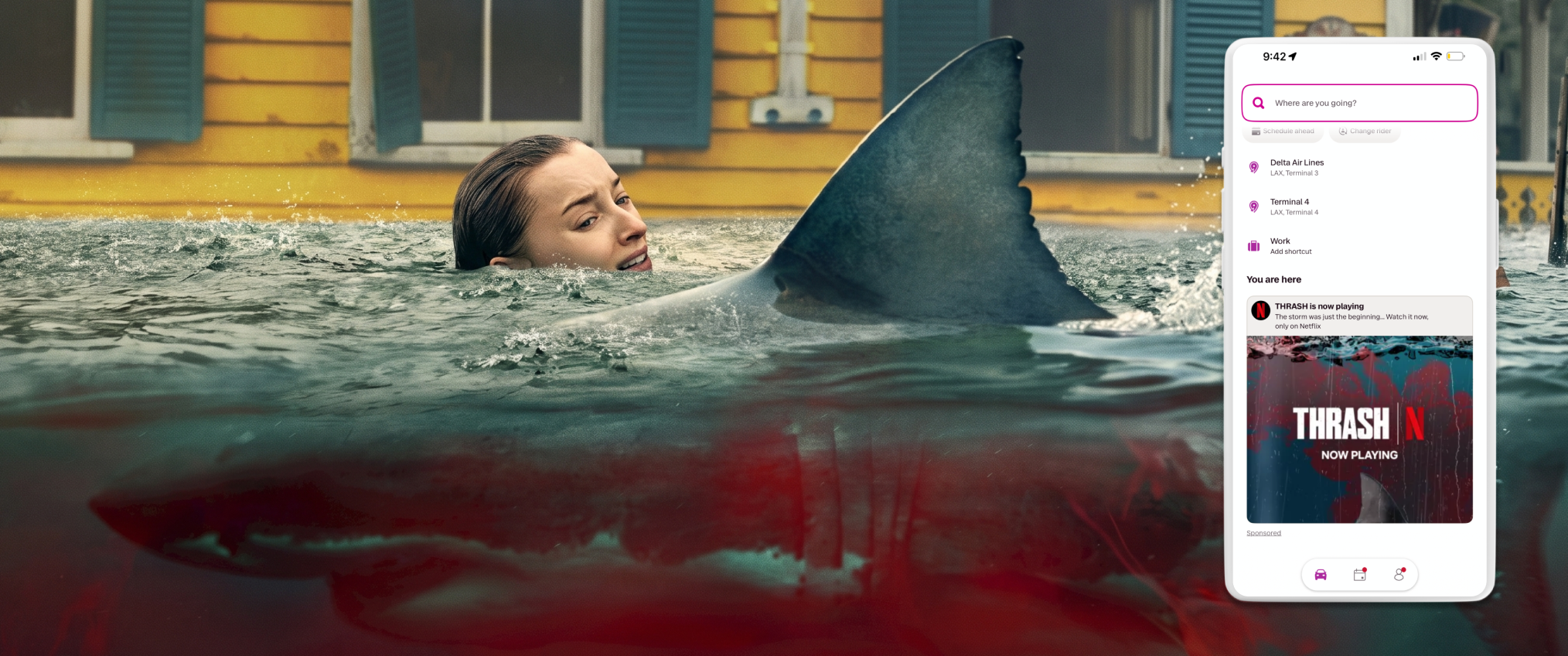
That Lyft wants more than mere banner reach is shown by past campaigns: for the Netflix title "THRASH", the platform reported in April 2026 6,76 million impressions via Map Splash and Map Takeover, plus more than 2,8 million riders reached. These figures come from the Lyft Ads case study; they concern earlier map formats, not the new masthead.
What German marketing teams find interesting about it
For German brands, the new masthead is initially not an announced product for Germany. Its significance lies in the advertising model: apps with recurring transactions become standalone media channels. If you reach your users at a clearly recognisable moment, you can sell ad placements differently than in an open social feed.
This development is also visible in other industries. IAG bundles airline contacts into an advertising platform; at Uber Eats, the focus is on measuring purchases made outside the app. At the same time, retail media is seeing growing demand for clean impact measurement.
The interesting test for Lyft is therefore not only how much space a masthead takes up. What will matter is whether the advertising respects the ride booking and brings brands measurably more attention or visits. That is exactly where a new reach placement separates from a lastingly attractive advertising channel.
Image credit: Lyft Ads / Netflix. The official visual shows an earlier Lyft campaign and not the new home masthead.
Source