Magazine
Yahoo Scout licenses AI sources for the first time through a shared publisher pool
Yahoo Scout becomes the first commercial customer of the Internet Licensing Collective. Over 3.000 media brands want to jointly license content for AI answers – with payment based on usage rather than just traffic.
Contents · 4 sections
Yahoo Scout becomes the first commercial licensee of the new Internet Licensing Collective (ILC). The alliance, launched on 12 November 2026, of more than 3.000 media brands, publishers and content providers wants to give AI companies legal access to large content collections through a single agreement – and distribute revenue based on actual usage.
This gives the debate over AI search a new, tangible business side: content is meant to become not just a source cited in answers, but a licensable product.
What Yahoo Scout is now buying
The Internet Licensing Collective was founded out of the former RSL Collective. As its first customer, Yahoo Scout gains access to licensed sources meant to supplement AI answers with current, verifiable information. According to the collective, the network already comprises billions of potentially licensable web content items.
The move fits Yahoo's search strategy: on 10 November, the company reported that Scout had delivered more than three billion AI answers since launching in early 2026. With Pivot Search, Yahoo combines classic results with AI summaries and is bringing Scout elements to News, Finance and Sports as well.
For the search provider, trustworthy content thus becomes an ongoing purchasable asset. For publishers, a second revenue path emerges alongside advertising, subscriptions and search traffic.
One agreement for different types of AI use
ILC wants to bundle rights by purpose of use. A provider can, for example, license content for training a model, for retrieval-augmented generation (RAG), for sourcing answers with citations, or for agent applications. Publishers decide for themselves which licensing models they join and which uses they agree to.
Important for publishers: according to ILC, membership is free and non-exclusive. Existing individual licensing agreements may continue. The machine-readable infrastructure known as Really Simple Licensing (RSL) can be used to publish usage conditions.
Unlike a blanket bot blocker, the system is meant to make the difference between not using, using under conditions and using for payment economically exploitable. The technical counter-position – explicitly excluding training via robots.txt – we explained in our report on the joint AI training opt-out.
Who earns how much from an AI answer?
According to ILC, payouts are meant to take into account how often and for what content is used and what value it has for the respective AI product. Digiday reports that the licensing fees are tied to the revenue development on the demand side. The amount of Yahoo's specific payment has not been published.
For smaller specialist portals the approach is interesting: they do not have to negotiate individually with every AI provider to be paid for high-quality, current sources. The decisive factors going forward will be the attribution of uses, the distribution rules and control over rights.
The Mather Economics report cited by the ILC projects a very large potential licensing business. That is a market projection, not a payout already realised for the participating publishers.
What this means for German publishers and marketers
If you only count referral clicks from ChatGPT or Google AI Overviews, you capture an ever-smaller slice of the value created. AI answers can rest on editorial knowledge even though users never visit the original website. This is exactly the shift our analysis of Google AI Overviews and the publisher opt-out addresses.
For publishing houses and independent specialist media, a concrete to-do list emerges: Which content may be licensed? Who holds the rights to texts, images and data? Are the sources current and structured? Which uses should remain free? And can AI use of your own data be cleanly traced?
The deal is also not the first attempt to combine AI search with editorial licences. Anthropic's AP partnership already demonstrated the bilateral model. The ILC is trying to turn this into infrastructure for many providers. In parallel, measurement approaches for AI visibility that record mentions and source citations separately are professionalising.
What is new about Yahoo Scout is therefore less the AI answer itself than the procurement behind it: when a major search provider buys licences collectively, content use becomes a calculable market – and not merely a question of visibility.
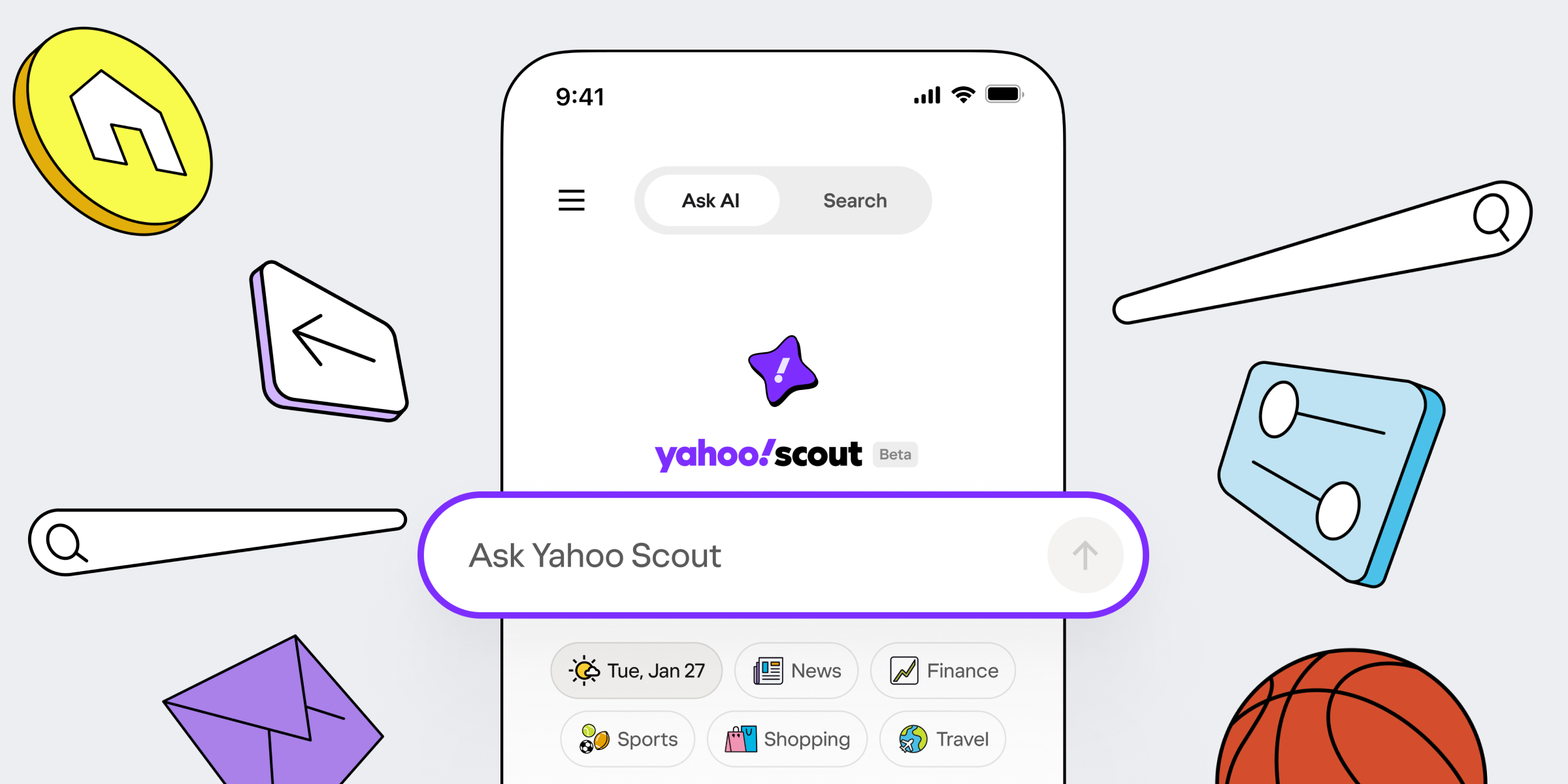
Image: Yahoo Inc., official Yahoo Scout product visual from the beta phase 2026 (archive representation).
Sources - Internet Licensing Collective: founding and Yahoo partnership, 12. November 2026 - Yahoo Inc.: Scout leaves beta, Pivot Search launches - ILC: membership, rights and usage control - Digiday: joint AI content licensing model
Source