Magazine
Ogilvy and CAA clone stars for ads: 50 spots from a celebrity shoot
Ogilvy ECHO turns a celebrity shoot into up to 50 AI ad spots. CAA supplies licensed digital likenesses and mandatory approvals – relevant for agencies in Germany too.
Contents · 4 sections
A celebrity shoot yields eight to ten ad spots. With an approved digital copy, it is meant to become 30 to 50 finished assets – for different countries, formats and current social media moments. That is what Ogilvy ECHO promises, the AI production platform from the WPP agency that was unveiled on November 9, 2026. It is made possible by a new partnership with the Hollywood agency Creative Artists Agency (CAA).
From one shoot to a whole campaign library
ECHO uses the professionally captured digital likenesses that CAA manages in its "Vault". There, the face, voice and movements of actors, athletes and other well-known personalities are recorded. The data can be used with Ogilvy's creative workflow in WPP Open to produce additional advertising videos and variants from one approved appearance.
The official product announcement from Ogilvy names 65 to 75 percent lower average cost per asset as a possible goal. Important: this is the provider's forecast, not an industry-wide proven cost saving. The new production approach has been commercially available within the WPP network since November.
An example of the potential is markets where a star promotes a product, but the visual is needed in many languages, formats and moments. Instead of repeatedly bringing the actor back to the studio, brands can have new variants made after the original shoot.
No AI spot should run without approval
ECHO's real distinguishing feature lies in how it handles rights: CAA manages digital likenesses and licensing terms. According to Ogilvy, automated systems check whether the planned use fits the contract and brand safety rules. Every finished visual additionally needs the consent of the represented person before it may be published.
Ogilvy also plans a visible label on approved releases: "[Talent Name] Approved | Recreated with AI". The agency wants not only to produce AI content, but also to communicate the original person's consent.
Digiday reports that actor Terry Crews is among the participating personalities. First pilot campaigns are still being negotiated; Ogilvy did not name specific advertising clients at launch. A licensing model is thus becoming a new production infrastructure – but not self-service rights to a star's face.
Consent becomes part of the creative
According to its own statement, Ogilvy surveyed more than 1.200 people in the USA, UK and India. Over 80 percent recognized the explicit talent approval as a signal of authorized AI use. Among more than 76 percent, this labeling improved ad effectiveness in terms of measured ad appeal. The combination of visible approval and a real testimonial is especially relevant: AI visuals will in future also need to explain why they are credible.
For agencies in Germany, this carries a legal dimension. Article 50 of the EU AI Act has applied since August 2, 2026 and requires, among other things, transparency for certain AI-generated content and deepfakes. The European Commission explains the labeling obligations. A displayed talent okay is therefore a sensible building block, but does not replace checking the rules that apply in each case.
What changes for creator contracts and media teams
For brands, a new cost question is becoming important: it's not just the fee for a shoot day that counts, but also the number of versions licensed from it, along with terms, markets and platforms. In return, creators must define very precisely which digital uses they permit and which approvals are needed per asset.
That AI production changes the cost structure is also shown by the Fresh Step case with three AI spots in 30 days. With ECHO, an additional component comes into play: the digital identity of the face used in advertising. How wide the range of today's creator contracts is, is shown in Srocke's overview of sponsored post pricing and usage rights. And the collaboration between Accenture Song and Whalar illustrates how agencies combine creator and AI expertise into new business models.
The probably most important shift: the shoot is no longer the finished advertising product, but the start of a controlled, licensed content series.
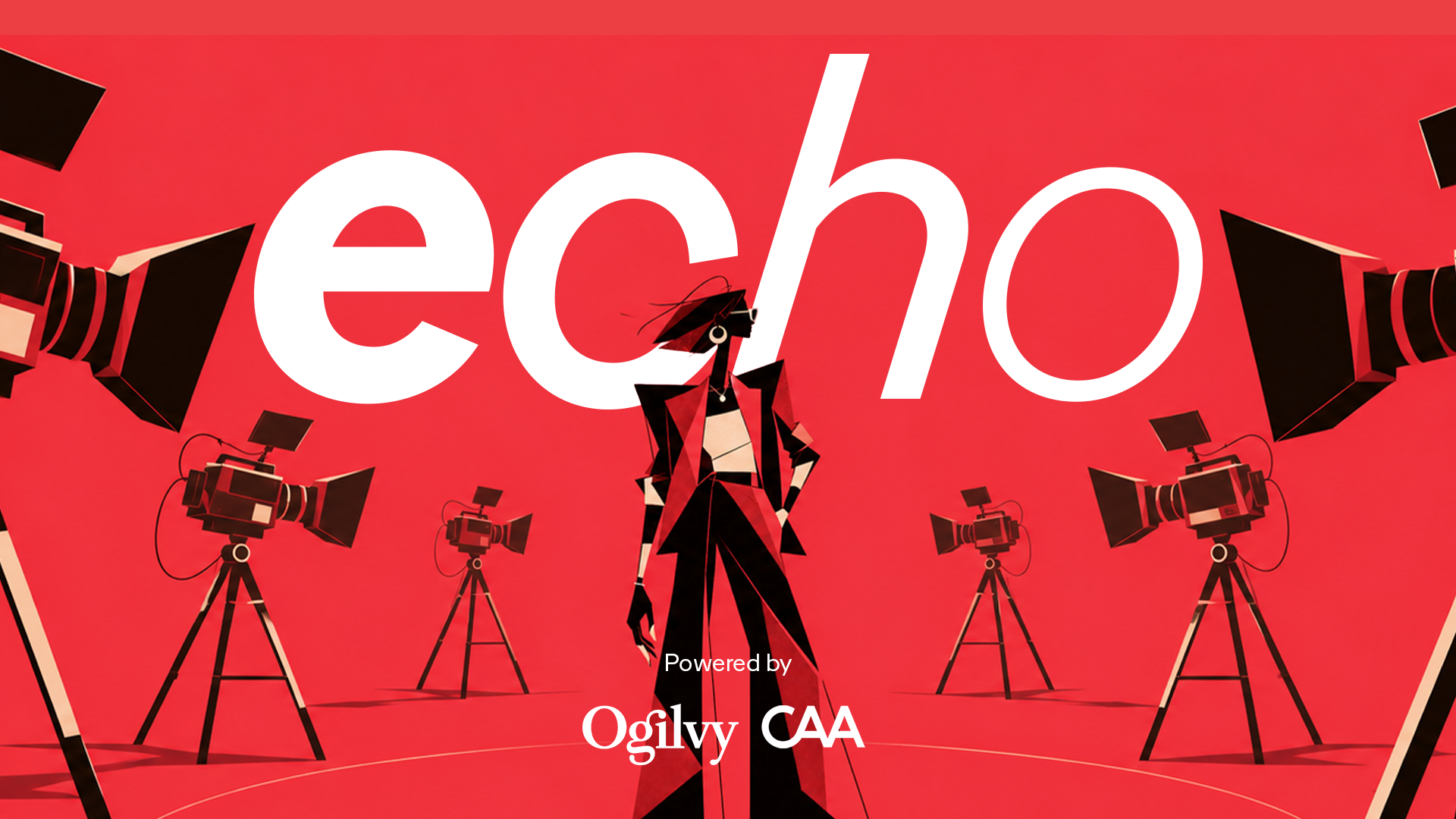
Image: Ogilvy / Creative Artists Agency, official ECHO press image.
Source