Magazine
RadioShack bets on retro tech and TikTok: a comeback without the old store chain
More than 170 retailers, retro radios and marketplaces including TikTok: RadioShack is rebuilding its US brand. What marketers can learn from the comeback.
Contents · 4 sections
RadioShack is building its return in the US on retro tech, online marketplaces and a network of independent retailers. The once ubiquitous electronics chain now sells radios, record players and cassette products with a vintage look, among other things, and uses sales channels from Amazon to TikTok. For brands this is an interesting model: a well-known past provides attention, while new products and sales channels are meant to turn that into business.
A cult brand returns, but not as the old store chain
The relaunch did not start this week. The Unicomer Group acquired 2023 the RadioShack brand rights and other assets in around 70 countries. In August 2024 the company announced the US relaunch with its own online shop and sales via Amazon and Walmart. A current industry report from TWICE now describes how this turns into a leaner retail model.
According to the US management, RadioShack works with more than 170 authorised retailers. These are independent points of sale, not a newly opened nationwide chain of its own stores. Instead of bringing back expensive sales floors on a large scale, the brand combines local advice with an online shop and marketplaces. The range still includes batteries, cables and electronic components; attention is mainly generated by devices in retro design.
Why an old radio can feel new to Gen Z
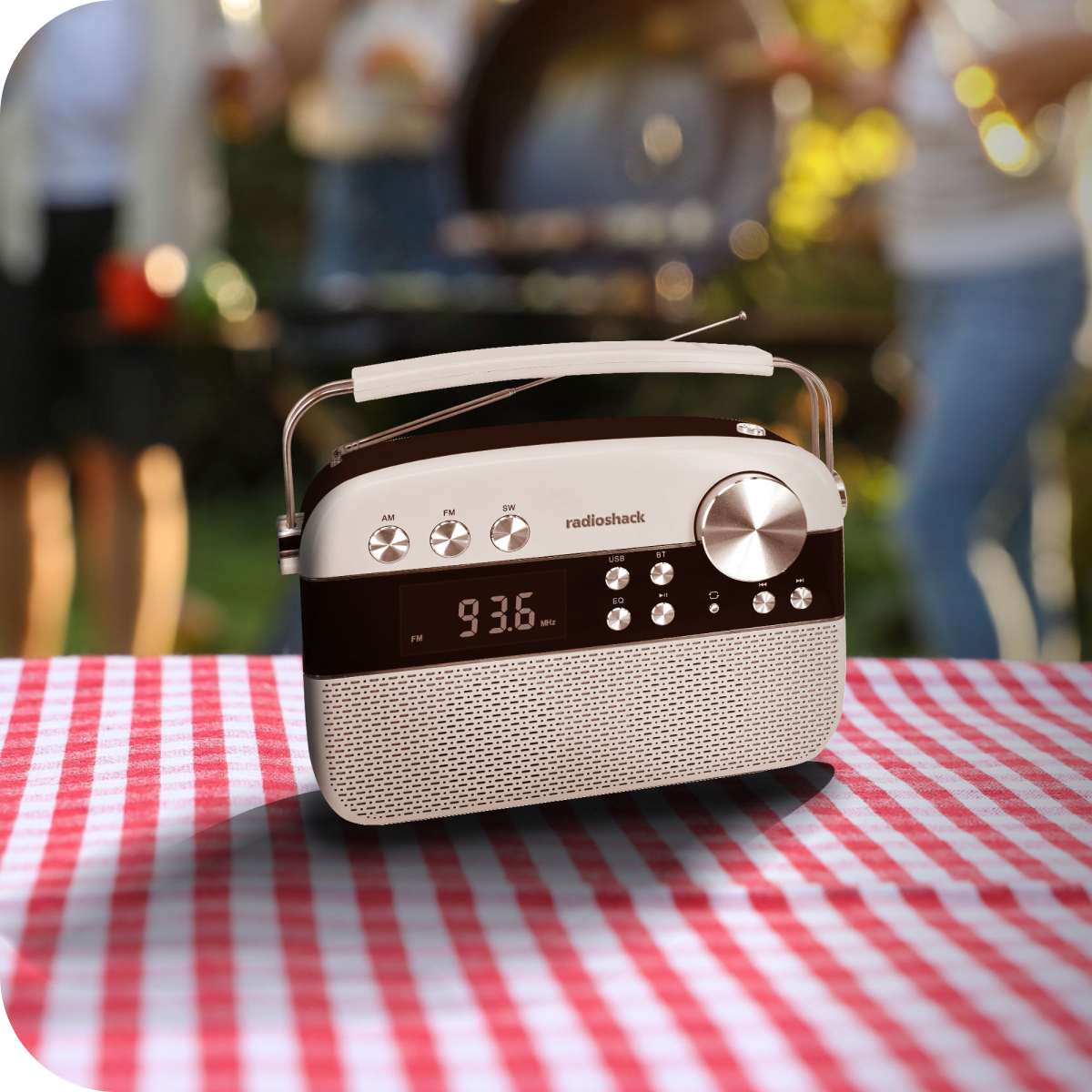
For selected products RadioShack deliberately uses the former logo and classic shapes. A retro radio from its own range looks like analogue station tuning and a wooden case, yet also plays music via Bluetooth. Design and use thus belong to two different eras.
Managing director Kevin Hamann, in an interview from 26 August 2026, described record players and vintage radios as especially popular categories. According to Hamann, the interest from younger buyers is remarkable. For former RadioShack customers the name evokes memories; younger people, by contrast, are discovering an aesthetic they never experienced in the original store.
The interest can also be seen in Germany. As the RedaktionsNetzwerk Deutschland reported in January 2026, based on classified ad data, search queries for CD players rose by 68 percent year on year, for vinyl record players by 70 percent, and for Game Boys by 28 percent. Retro is therefore not merely a style for advertising visuals, but a concrete search and shopping occasion.
A similar principle lies behind the Y2K brand relaunch of AXE: the past becomes recognisable when it can be translated into the visual language and media use of the present.
TikTok as a sales channel, local retailers as the counterpart
Alongside Amazon and Walmart, RadioShack also names Target, Best Buy and TikTok as distribution channels. The brand is therefore trying to offer products where people already browse and buy. For Target and Macy’s, according to Hamann, these are explicitly online marketplace listings, not a nationwide presence in their stores.
Vintage tech has a practical advantage for social commerce: rotary dials, cassette compartments, wooden cases or placing a record on the turntable can all be shown in a few seconds. Product demos and creator videos can turn a visual eye-catcher into an understandable buying offer. How brands systematically link such content to sales is also shown by current TikTok Shop strategies for creators and live commerce.
The second pillar is advice. According to management, independent retailers give RadioShack feedback on which products and prices work locally. A brand name alone does not replace this proximity – the company builds it through partners rather than through a huge store network of its own.
What German marketers can learn from the comeback
RadioShack combines three things that are often treated separately: brand heritage, visually appealing products and a distribution model that fits today's buying habits. The historic logo is not the real business model. It makes it easier to enter a story that can be discovered on a smartphone and then bought online or at a local retailer.
That also contrasts with pure nostalgia campaigns. As with the repositioning of Dr. Martens, a familiar brand element only becomes commercially interesting once it connects to current products, communities and distribution.
Sources: Unicomer: US relaunch 2024 · RadioShack: product catalogue · TWICE: interview with Kevin Hamann, 26. August 2026 · TWICE: retail strategy, 2. October 2026 · RND: retro technology in Germany, 9. January 2026.
Source