Magazine
Creators earning six figures feel AI pressure three times as often
64% of US creators earning six figures feel strong pressure to use AI, compared with 19% in the lowest income group. For brands, briefing and usage-rights requirements are rising.
Contents · 3 sections
The more successful creators become, the stronger the pressure to use AI apparently grows. Among professional US creators and music makers with at least 100.000 US dollars in annual earnings, 64 percent report large or very large AI pressure. In the group earning less than 5.000 dollars, it is only 19 percent. The new detailed figures from a Sapio Research survey were published by Business Insider on 13 November 2026.
For creator marketing, this is an interesting shift: AI is becoming not just a cheap entry point for individuals, but the production infrastructure for exactly the talent brands pay premium prices for.
Success means more formats, not just more reach
Those who make a living from content often produce for multiple platforms, create cutdowns, sell sponsorships and regularly have to try out new formats. This workload explains why higher-earning creators use AI more often. According to the US analysis, 45 percent of respondents earning above 100.000 dollars also use fully AI-generated content or music; below 5.000 dollars, it is 23 percent.
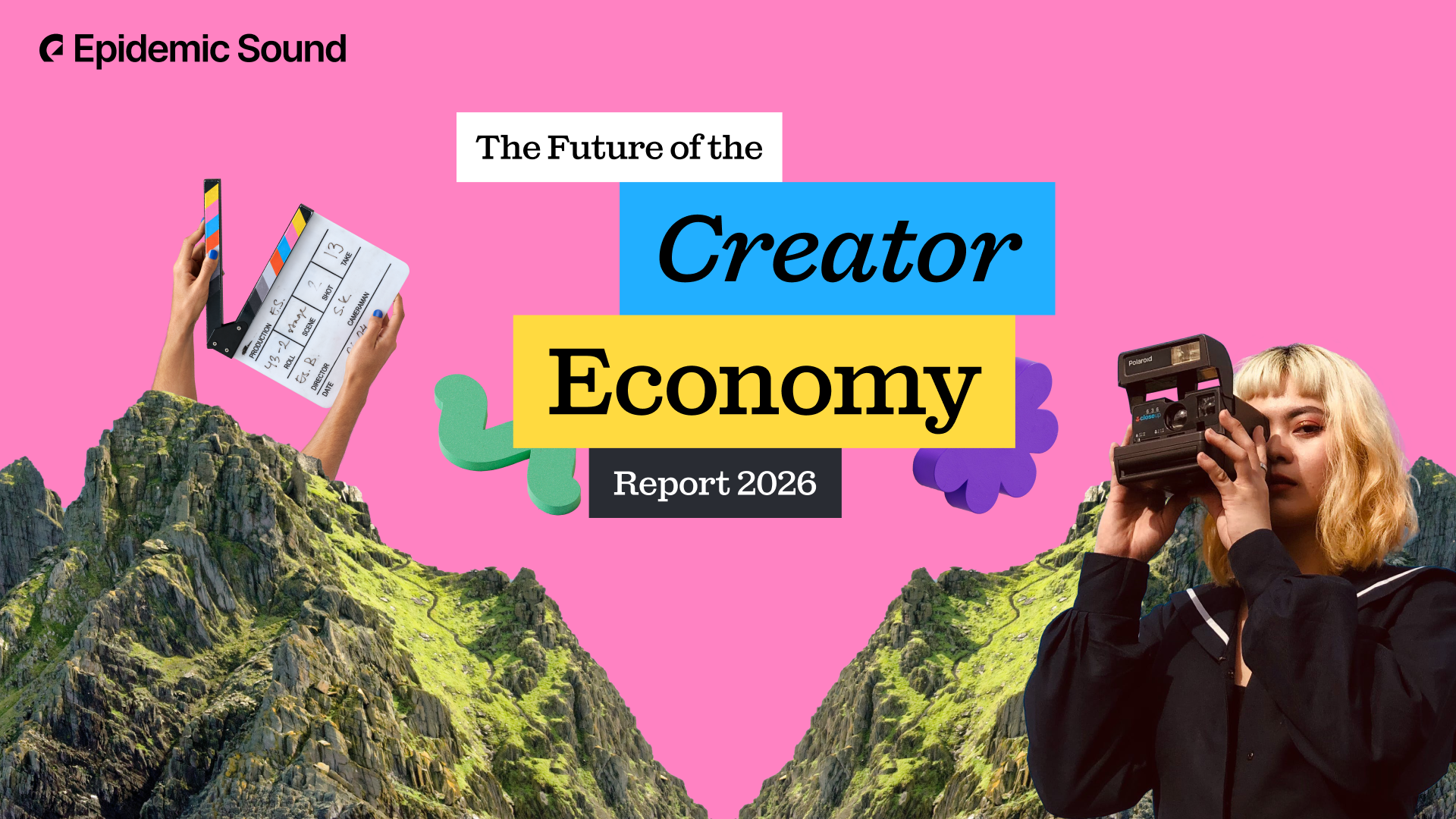
A look at the official Creator Economy Report by Epidemic Sound provides the broader context: 94 percent of surveyed creators already use AI, particularly for optimisation, ideas, production and analysis. The full report covers 3.000 creators from the US and UK; Business Insider's current income analysis refers to the 2.000 US participants. Both surveys were conducted in March and April 2026.
That creators automate more under time pressure fits the trend of ever-growing content volumes. In Unilever's social-first strategy with hundreds of thousands of creators, this scaling is already part of the brand's organisation.
The real premium will be a recognisable hand
As more and more automatically generated variants appear, personal recognisability becomes the differentiator. 77 percent of US respondents see human-made content as a premium offering, and 78 percent consider clear AI labelling important to maintain trust. Across the full report, the corresponding figures are 75 percent.
This creates a practical difference between AI in the background and AI as a replacement for the person in front of the camera. A creator can automate research, transcripts, subtitles and rough cuts without outsourcing their own voice or editorial decisions. If the face or voice is replaced artificially, however, the relationship with the community is directly affected.
This division of labour is also described in our article on the creator economy between AI assistance and authenticity.
Creator briefings now also need AI and rights rules
For German agencies, this means less a question of being for or against AI and more an additional layer in contracts and quality control. Three questions should be clarified before any collaboration: Which production steps may be automated? Are synthetic voices, faces or AI-generated scenes permitted, and how are they labelled? Who owns the materials and usage rights, including later reuse as paid social?
This is no mere formality. In the broader report, Epidemic Sound notes that 53 percent of respondents have already seen business opportunities affected by copyright or licensing issues. For long-term formats in particular, it is therefore worth looking closely at the contract and IP models for creator productions.
The new income analysis concerns US creators and cannot be directly applied to fees in Germany. However, it shows an important mechanism for campaign planning: those who rely on successful creators increasingly buy in a professional production team – often with AI in the toolkit, but ideally with a distinctive human idea at the top.
Sources: Business Insider: Income groups and AI pressure, 13. November 2026 · Epidemic Sound: The Future of the Creator Economy Report 2026 · Epidemic Sound: Press release from 28. May 2026
Source