Social Rocket

Target is examining additional digital ad displays in its US stores but has announced no expansion. Adweek reported this after a Roundel event for advertising partners in October 2026. For brands, the more interesting development for now is a different one: Target already uses its app and mobile website as an advertising channel while customers shop in store.
A smartphone can be the in-store ad space
According to Jenny Holleran, Vice President at Target's advertising unit Roundel, 60 percent of customers who use the Target app or mobile website in store see ads there. The denominator matters: the statement applies to this mobile subgroup, not to 60 percent of all store visitors.
Separately, Roundel's official website cites another figure: 76 percent of Target customers browse online while in store, based on the company's own survey. That measures a different behaviour and is not directly comparable with the share of app users reached. Roundel also states that Target records over 30 million store visits per week – a reach figure provided by the company, not campaign measurement.
For advertisers, this creates an existing touchpoint between product research and the decision at the shelf. Roundel offers, among other things, sponsored products on Target.com and in the app, as well as social, display, connected TV and other placements.
Why Target hesitates over additional screens
According to statements at the partner event, Target would only consider permanently installed digital ad space if it does not disrupt the shopping experience. Neither a fixed number of new screens, a rollout date nor a new advertising rate was mentioned. Existing service hubs or other screens are not evidence of new nationwide ad infrastructure.
This consideration differs from a simple "more screens equals more reach". Customers could ignore additional display ads or find them intrusive, whereas an ad on the shopping device they are already using appears in a different context. Whether this leads to higher sales must be measured.
What German retail media buyers should watch
The key question is first incremental reach: how many additional people do fixed displays actually reach compared with the app, web and existing in-store placements? Second, ad exposure, shopping cart and purchase must be linked in a privacy-compliant and methodologically traceable way. Third, an experiment should measure the effect against a comparable control group instead of automatically deriving additional sales from views.
This measurement gap is relevant across the industry: our analysis of Roundel's incrementality survey and our overview of full-funnel retail media distinguish metrics from genuine causal effects. What location-based advertising beyond retail should deliver is shown by the Simon Media Network.
Assessment: Target is not demonstrating a finished rollout of advertising displays, but a strategic decision about the right advertising touchpoint: a relevant ad during the ongoing mobile shopping journey rather than untested additional screens in store.
Sources: Adweek, 19.10.2026; Roundel, official advertising offers, metrics and measurement notes; Roundel, In-Store Hubs.
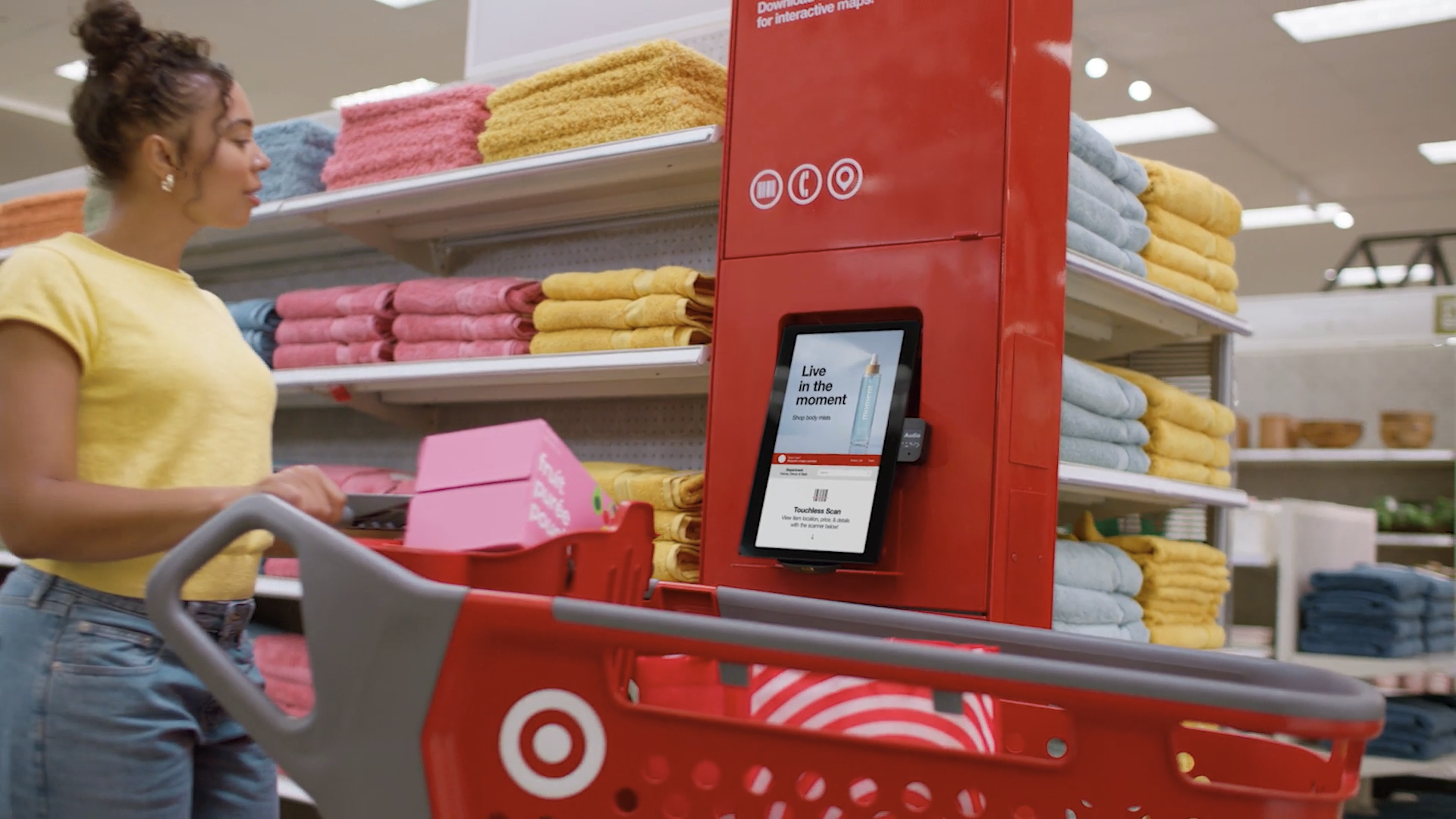
Image: Target / Roundel, official company visual. The photo shows an existing service hub, not the in-store advertising displays being discussed.